
Anaheim, California (ZeroRig) – One of ACT Expo’s debut sessions was a Hydrogen Workshop aimed at educating fleet operators on the state of hydrogen vehicles, including topics on ownership, trends in the industry, and the dynamics of hydrogen availability and refueling logistics.
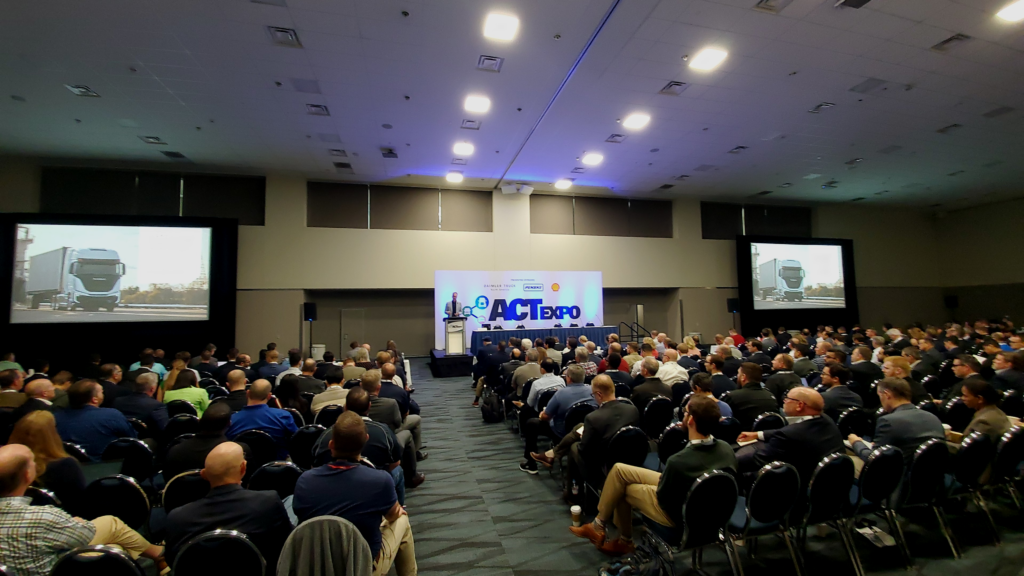
The room was packed as the Hydrogen Workshop kicked off with a keynote address by Michael Lohscheller, Chief Executive Officer of Nikola Corporation. Nikola is one of the largest and most innovative brands involved in the manufacture of hydrogen vehicles.
The remainder of the workshop was divided into three sessions:
- Fleet Operations: Hydrogen’s Evolving Role in Transportation
- Staying Ahead of the Curve: Emerging Vehicle Availability
- The Hydrogen Supply Chain: Production, Distribution, Storage
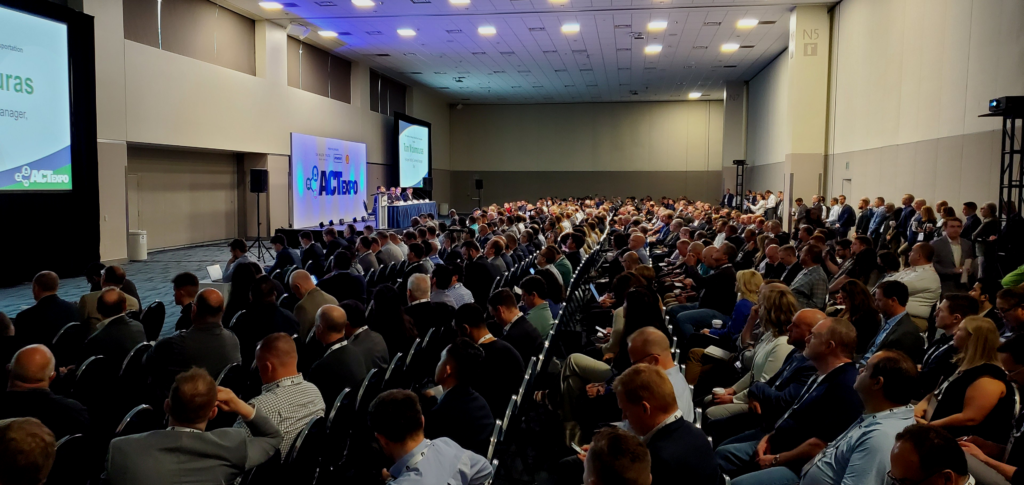
Fleet Operations: Hydrogen’s Evolving Role in Transportation
The panel of experts presented real-world case studies from various types of freight fleets that are currently utilizing hydrogen fuel cell vehicles. These case studies included examples from regional haul, drayage, transit, off-road, and long-haul freight fleets. By showcasing the experiences of these fleets, the experts provided valuable insights into the practical application of hydrogen fuel cell vehicles and the benefits they can offer to different types of fleets.
Also discussed were the various factors and considerations that impact the total cost of ownership for hydrogen fuel cell vehicle operations. These factors included the cost of the vehicles themselves, maintenance and repair costs, the cost of fuel, and the availability of hydrogen refueling infrastructure. By analyzing these factors, the experts were able to provide guidance on how to optimize the total cost of ownership for hydrogen fuel cell vehicle operations.
Next the experts provided an overview of the different types of hydrogen refueling infrastructure, including on-site refueling stations, off-site refueling stations, and mobile refueling options. They also discussed the various considerations that fleet operators need to take into account when securing and accessing hydrogen refueling infrastructure for commercial fleet use.
The session concluded by addressing the scaling considerations that come with going beyond test and pilot programs and into mass deployments of hydrogen fuel cell vehicles in commercial fleets. These considerations include the need for a robust hydrogen refueling infrastructure, the availability of funding and incentives, and the need for skilled technicians to maintain and repair the vehicles. The experts provided guidance on how fleets can navigate these scaling considerations and successfully transition to large-scale deployments of hydrogen fuel cell vehicles.
MODERATOR: Tom Mourmouras, Hydrogen Mobility Commercial Manager, Shell
- Gregg Stumbaugh, Corporate Equipment Director, Biagi Bros Inc.
- Roland M. Cordero, Director of Maintenance and Vehicle Technology, Foothill Transit
- Damiano Micelli, Chief Technical Officer, Landi Renzo
- Kevin Slusser, Senior Engineer – Hydrogen System Safety, Daimler Truck North America
Staying Ahead of the Curve: Emerging Vehicle Availability
The second session focused on the future of hydrogen vehicles and economics. The experts began with a timeline for commercialization of medium and heavy-duty hydrogen fuel cell vehicles and hydrogen engine technologies designed to meet different fleet applications. There are different procurement models available for this technology: purchase, lease and/or as-a-service. These different models were compared and contrasted with one another. Conversation then turned to which commercial fleet applications are best for hydrogen fueled vehicles.
Questions regarding the form and next generation of hydrogen were examined: Which is better, liquid or compressed hydrogen? Options and key considerations for on-board hydrogen fuel storage systems were shared, along with advancements that can be expected with the next generation of hydrogen vehicle technologies.
Finally, the second session focused on questions of return on investment and scale. In particular, scaling production from pilot projects to widespread utilization, making total cost of ownership competitive through fuel savings and maintenance reductions, and maintenance considerations and other workforce development needs to support hydrogen fueled vehicle operations were analyzed.
MODERATOR: Morten Holum, Chief Executive Officer, Hexagon Purus
- George Rubin, Chief Commercial Officer, Loop Energy
- Jim Nebergall, General Manager – Hydrogen Engines, Cummins
- Rob Del Core, General Manager, Symbio
- Martin Zeilinger, Executive Vice President and Head of Commercial Vehicle LCM (Life Cycle Management) Tech Unit, Hyundai Motor Company
- Adam King, Business Development Manager – HYDROTEC Fuel Cells, General Motors
The Hydrogen Supply Chain: Production, Distribution, Storage
The final panel opened with a discussion on hydrogen production, distribution, storage, and fueling needed to support commercial fleet operations. The state of the industry today was addressed, but experts also looked out one, three, and five years onto the horizon to illuminate possible changes in the industry and how future events may impact the industry and fleet economics. The topic of “green hydrogen” and its affordability was given a special highlight.
Experts discussed the relationships between federal incentives and policies and the viability of hydrogen fleets across and between regions of the United States. Regional hydrogen economies, rather than a country-wide mass adoption, may develop as a result of variable government involvement and incentive structures. Future public-access infrastructure and corridor build-out strategies will influence the viability of hydrogen vehicles at a logistical level.
Special attention was placed on meeting the fueling needs of a growing hydrogen fleet both today and tomorrow.
MODERATOR: Neil Navin, Chief Clean Fuels Officer, Southern California Gas Company
- Greg Gosnell, Chief Executive Officer and President, GenH2
- Kimberly Okafor, General Manager of Zero Emission Solutions, Trillium – A Love’s Company
- William A. Zobel, Director, Alternative Fuel Strategy and Sales, Pilot Company
- Stacey Grauer, Director of Business Development, Clean Hydrogen, Linde Inc.
ZeroRig will continue to cover ACT Expo as the event unfolds over the next several days.